300 BCE - 200 BCE | K-Y Z-I
Overstriking coin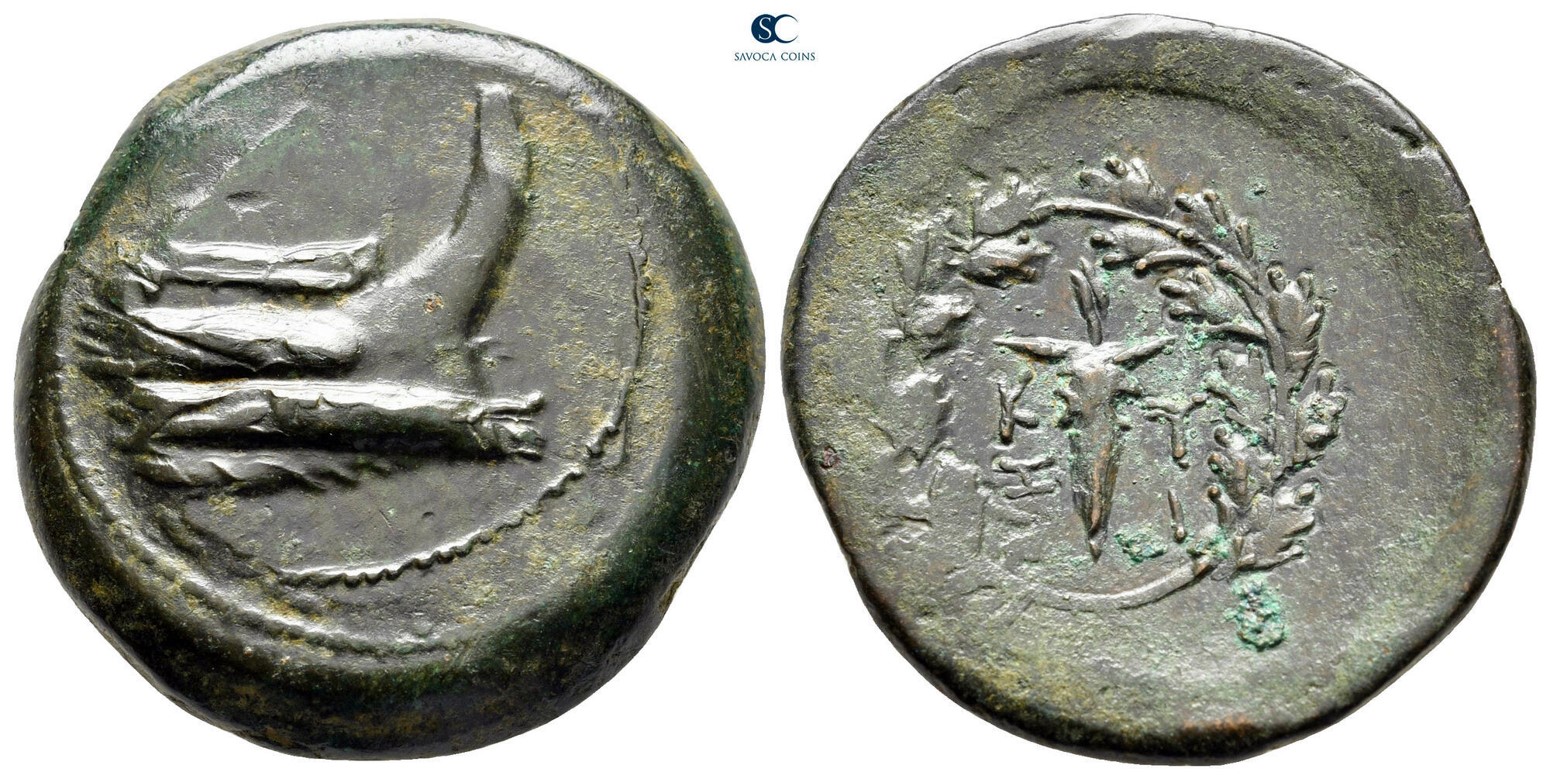
SO 2239 - Cyzicus over Cyzicus (Savoca, 19 Sept. 2021, 128).jpg
[1]
Overstruck variety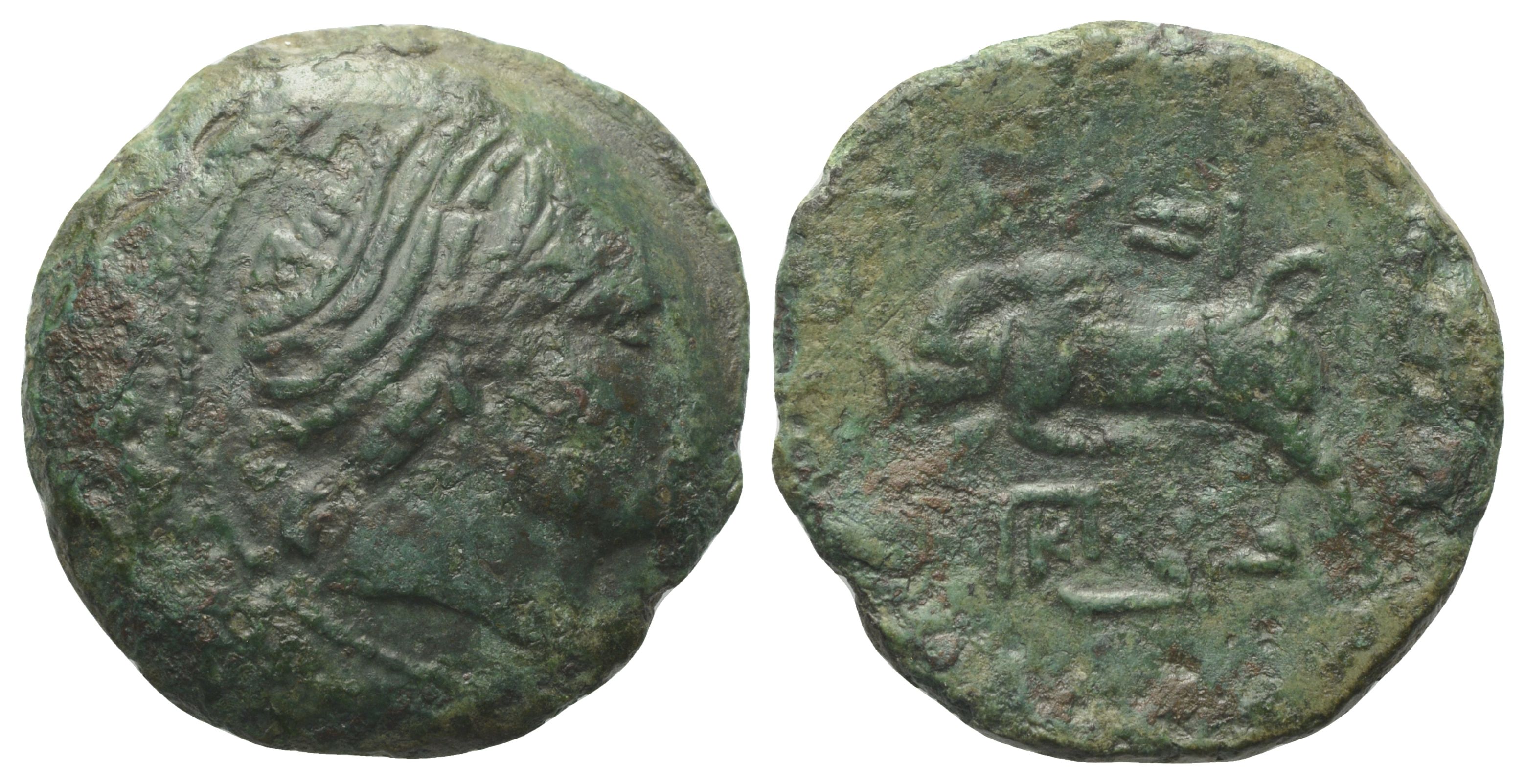
SO 52 - Cyzikus over Cyzikus overstruck variety.jpg
|
|
Sale(s)Sale(s) ᵖ:
|
Savoca Numismatik, 113, 19 Sept. 2021, no. 128.
|
|
|
|
Description
| ObverseInscription or printing placed on the obverse.:
|
Prow to right
|
ReverseInscription or printing placed on the reverse.:
|
K-Y Z-I (Greek) Bucranium in oak wreath
|
Mint and issuing power
| MintIdentifies the place of manufacture or issue of a numismatic object.:
|
Cyzicus
|
Ancient regionAncient region.
|
Mysia
|
Modern countryModern country: Turkey
|
AuthorityIdentifies the issuing power. The authority can be "pretended" when the name or the portrait of X is on the coin but he/she was not the issuing power. It can also be "uncertain" when there is no mention of X on the coin but he/she was the issuing power according to the historical sources:
|
|
Chronology
| FromIdentifies the initial date in a range assigned in a numismatic context. 300 BCE toIdentifies the final date in a range assigned in a numismatic context.. 200 BCE
|
Hellenistic 323-30 BC  periodTime period of the numismatic object. periodTime period of the numismatic object.
|
Physical description
| MetalThe physical material (usually metal) from which an object is made.: Bronze
|
WeightWeight of the numismatic object (in grams). in grams: 16.5016.5 g <br />16,500 mg <br />
|
|
|
| DiameterDescribes diameter of an object (in mm).: 3030 mm <br />3 cm <br />
|
|
References
Description
| ObverseInscription or printing placed on the obverse.:
|
Head of Kore Soteira right, wearing earring and necklace, wreath of grain ears
|
ReverseInscription or printing placed on the reverse.:
|
KYZI (Greek) Bull left, butting. Below, monogram, or monogram and symbol, or two symbols
|
Mint and issuing power
| MintIdentifies the place of manufacture or issue of a numismatic object. ᵖ:
|
Cyzicus
|
Ancient regionAncient region. ᵖ
|
Mysia
|
Modern countryModern country: Turkey
|
AuthorityIdentifies the authority in whose name (explicitly or implicitly) a numismatic object was issued. ᵖ:
|
|
Chronology
| FromIdentifies the initial date in a range assigned in a numismatic context. 300 BCE toIdentifies the final date in a range assigned in a numismatic context.. 250 BCE
|
Hellenistic 323-30 BC periodTime period of the numismatic object.
|
Physical description
References
References
- a b Fritze, Hans von (1917), "Die autonome kupferpragung von Kyzikos. Eine chronologische Studie", Nomisma, 10, p. 1-32, pl. I-VI.
- a b Levante, Edoardo (2001), Sylloge nummorum graecorum. France. 5, Département des monnaies, médailles et antiques : Mysie, Paris-Zürich, Bibliothèque nationale de France-Numismatica Ars Classica, XL + 131 pl.
- a b Sylloge Nummorum Graecorum. Sammlung v. Aulock. Mysien. 4 Heft. Nr. 1050-1438, Berlin, 1957
.jpg)