80 BCE - 68 BCE | BAΣIΛEΩΣ BAΣIΛEΩN TIΓPANOY
Overstriking coin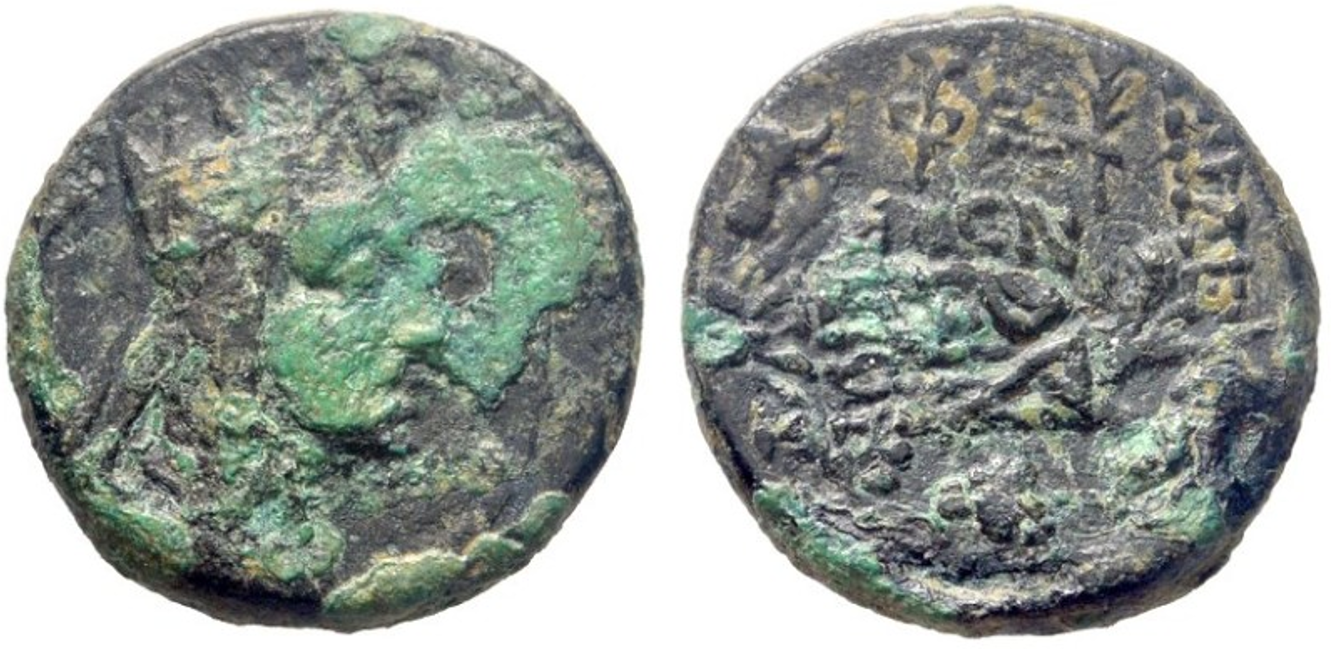
Tigranocerta_over_Aradus_(Lanz, _160, _June_2015, _273).PNG
[1]
Overstruck variety
Aradus Astarte bull Paris.jpg
[2]
|
|
Sale(s)Sale(s) ᵖ:
|
Lanz 160 (15/06/2015), n° 273
|
|
|
|
Description
| ObverseInscription or printing placed on the obverse.:
|
Bust of Tigranes II to right, wearing Armenian tiara decorated with a star between two eagles and tied with a diadem, drapery on shoulders. Border of dots.
|
ReverseInscription or printing placed on the reverse.:
|
BAΣIΛEΩΣ BAΣIΛEΩN TIΓPANOY (Greek) Tyche of Antioch seated on rocks right, wearing turreted crown, holding palm branch. At her feet, the upper portion of the river-god Orontes swimming right. In field, letters/monograms. Border of dots.
|
Mint and issuing power
Chronology
| FromIdentifies the initial date in a range assigned in a numismatic context. 80 BCE toIdentifies the final date in a range assigned in a numismatic context.. 68 BCE
|
Hellenistic 323-30 BC  periodTime period of the numismatic object. periodTime period of the numismatic object.
|
Physical description
| MetalThe physical material (usually metal) from which an object is made.: Bronze
|
WeightWeight of the numismatic object (in grams). in grams: 6.046.04 g <br />6,040 mg <br />
|
DenominationTerm indicating the value of a numismatic object. Examples: tetradrachm, chalkous, denarius.: tetrachalkon
|
|
|
|
|
References
Description
| ObverseInscription or printing placed on the obverse.:
|
Head of Astarte-Europa right (visible on obverse)
|
ReverseInscription or printing placed on the reverse.:
|
Humped zebu galloping left.
|
Mint and issuing power
| MintIdentifies the place of manufacture or issue of a numismatic object. ᵖ:
|
Aradus
|
Ancient regionAncient region. ᵖ
|
Syria
|
Modern countryModern country: Syria
|
AuthorityIdentifies the authority in whose name (explicitly or implicitly) a numismatic object was issued. ᵖ:
|
|
Chronology
| FromIdentifies the initial date in a range assigned in a numismatic context. 86 BCE toIdentifies the final date in a range assigned in a numismatic context.. 86 BCE
|
Hellenistic 323-30 BC periodTime period of the numismatic object.
|
Physical description
References
References
- ^ Bedoukian, Paul Z. (1978), Coinage of the Artaxiads of Armenia, RNS Special Publication Number 10, London, 81 p.
- ^ Nercessian, Yeghia T. (1995), Armenian Coins and Their Values, Armenian Numismatic Society Special Publication 8, Los Angeles.
- ^ Nercessian, Yeghia T. - Saryan, Levon T. (1996), "Overstruck and countermarked coins of the Artaxiad dynasty of Armenia", Armenian numismatic journal 22/2-3, p. 23-62, pl. 1-6
- ^ Kovacs, Frank (2016), Armenian coinage in the classical period, Classical Numismatic Studies 10, Lancaster, 83 p.
- ^ Hill, George Francis (1910), A Catalogue of the Greek coins in the British Museum. vol. XXIII : Phoenicia, London, The Trustees, p. 361, pl. 45.
- ^ Duyrat, Frédérique (2005), Arados hellénistique. Etude historique et monétaire, Beirut
- ^ Hoover, Oliver D. (2010), The Handbook of Greek Coinage Series. 10. handbook of coins of the Southern Levant : Phoenicia, southern Koile Syria (including Judaea), and Arabia, Lancaster-London, lxxix, 201 p.
.PNG)