123 BCE - 104 BCE | Monogram of the city
Overstriking coin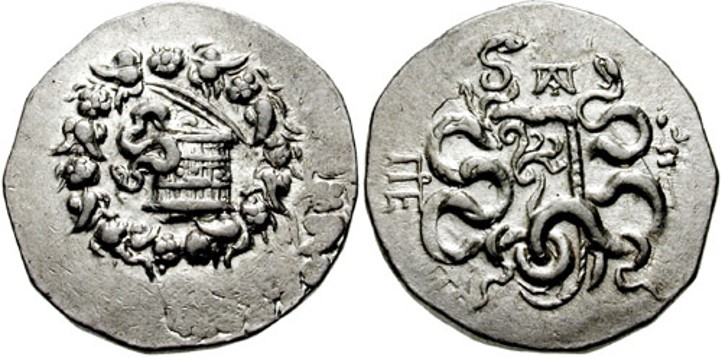
SO 76 - Pergamum over uncertain cistophorus (Classical Numismatic Group, 24 Sept. 2003, 237).jpg
[1]
Overstruck variety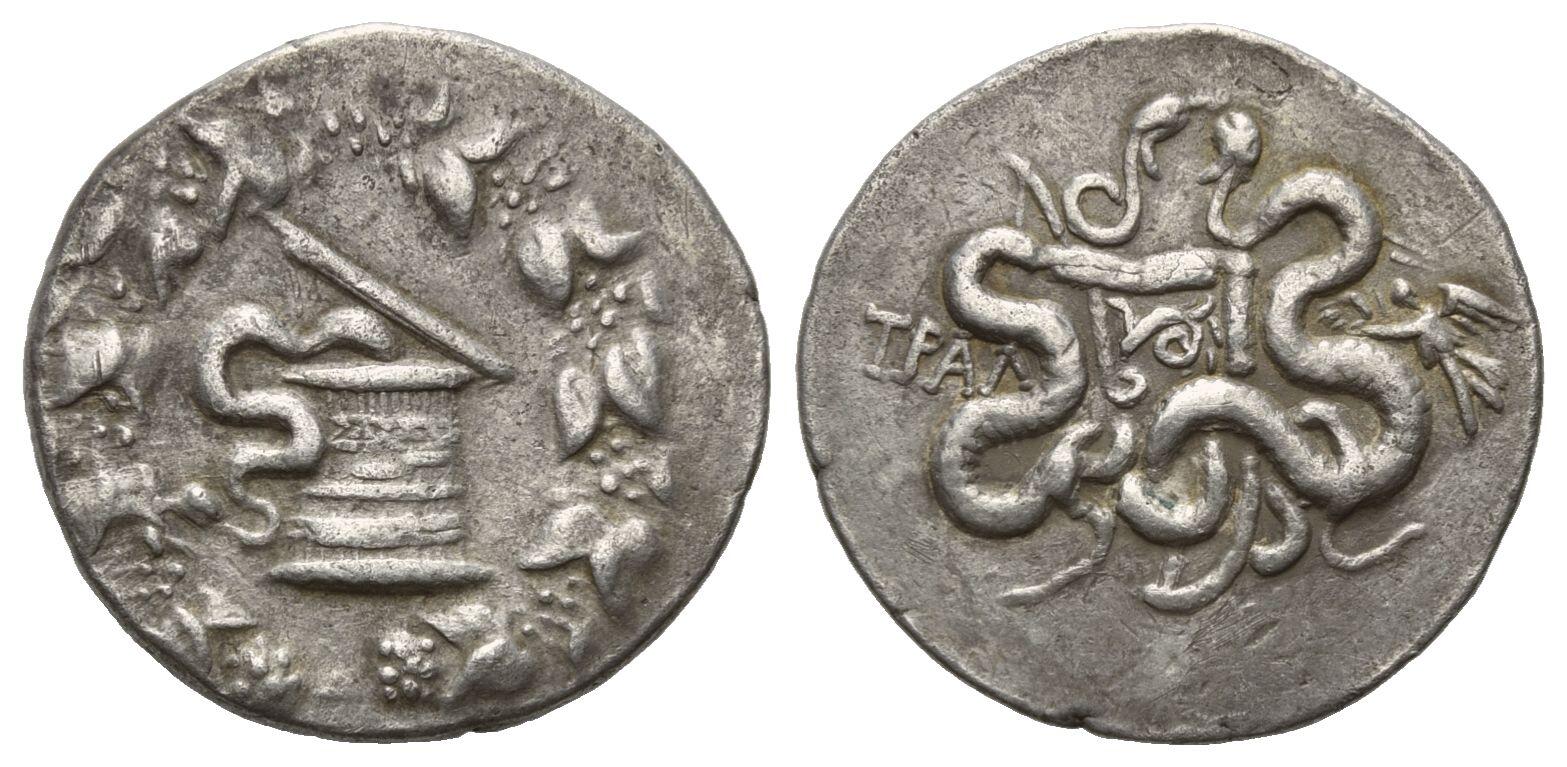
SO 75 - Pergamum over Pergamum overstruck variety.jpg
|
|
Sale(s)Sale(s) ᵖ:
|
Classical Numismatic Group, Mail Bid Sale 64, 24 Sept. 2003, 237
|
|
|
|
Description
| ObverseInscription or printing placed on the obverse.:
|
Cista mystica with half-open lid, from which a snake emerges. All within wreath of ivy with berries.
|
ReverseInscription or printing placed on the reverse.:
|
Monogram of the city (Greek) Bow-case with serpents, monogram above, thyrsos right
|
Mint and issuing power
| MintIdentifies the place of manufacture or issue of a numismatic object.:
|
Pergamum
|
Ancient regionAncient region.
|
Mysia
|
Modern countryModern country: Turkey
|
AuthorityIdentifies the issuing power. The authority can be "pretended" when the name or the portrait of X is on the coin but he/she was not the issuing power. It can also be "uncertain" when there is no mention of X on the coin but he/she was the issuing power according to the historical sources:
|
Roman Republic
|
Chronology
| FromIdentifies the initial date in a range assigned in a numismatic context. 123 BCE toIdentifies the final date in a range assigned in a numismatic context.. 104 BCE
|
Hellenistic 323-30 BC  periodTime period of the numismatic object. periodTime period of the numismatic object.
|
Physical description
| MetalThe physical material (usually metal) from which an object is made.: Silver
|
WeightWeight of the numismatic object (in grams). in grams: 12.6012.6 g <br />12,600 mg <br />
|
DenominationTerm indicating the value of a numismatic object. Examples: tetradrachm, chalkous, denarius.: cistophoric tetradrachm
|
|
|
|
|
References
Description
| ObverseInscription or printing placed on the obverse.:
|
Cista mystica with half-open lid, from which a snake emerges. All within wreath of ivy with berries.
|
ReverseInscription or printing placed on the reverse.:
|
Bow-case with serpents
|
Mint and issuing power
| MintIdentifies the place of manufacture or issue of a numismatic object. ᵖ:
|
|
Ancient regionAncient region. ᵖ
|
Ionia
|
Modern countryModern country:
|
AuthorityIdentifies the authority in whose name (explicitly or implicitly) a numismatic object was issued. ᵖ:
|
|
Chronology
| FromIdentifies the initial date in a range assigned in a numismatic context. 160 BCE toIdentifies the final date in a range assigned in a numismatic context.. 124 BCE
|
Hellenistic 323-30 BC periodTime period of the numismatic object.
|
Physical description
| DenominationTerm indicating the value of a numismatic object. Examples: tetradrachm, chalkous, denarius. ᵖ:
|
cistophoric tetradrachm
|
StandardStandard. ᵖ:
|
Cistophoric
|
References
References
- ^ Kleiner, Fred S. (1978), "Hoard evidence and the late Cistophori of Pergamum", American Numismatic Society. Museum Notes, 23, p. 77-105.
- ^ Carbone, Lucia Francesca (2020), Hidden Power. Late Cistophoric Production and the Organization of Provincia Asia (128-89 BC), Numismatic Studies 42, New York, 266 p., 140 pl.
.jpg)