330 BCE - 300 BCE | ΑΡΓΕΙΩΝ
Overstriking coin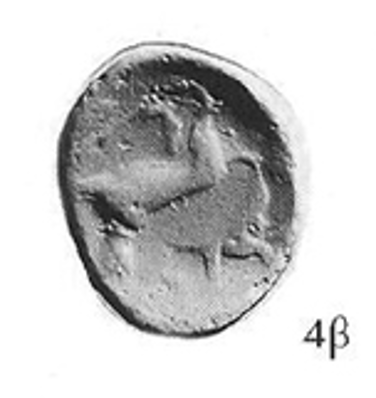
Kremydi_4.png
Description
| ObverseInscription or printing placed on the obverse.:
|
Head of Hermes to left.
|
ReverseInscription or printing placed on the reverse.:
|
ΑΡΓΕΙΩΝ (Greek) Dog running to right, in exergue, spear tip to right
|
Mint and issuing power
| MintIdentifies the place of manufacture or issue of a numismatic object.:
|
Argos Amphilochicum
|
Ancient regionAncient region.
|
Acarnania
|
Modern countryModern country: Greece
|
AuthorityIdentifies the issuing power. The authority can be "pretended" when the name or the portrait of X is on the coin but he/she was not the issuing power. It can also be "uncertain" when there is no mention of X on the coin but he/she was the issuing power according to the historical sources:
|
|
Chronology
| FromIdentifies the initial date in a range assigned in a numismatic context. 330 BCE toIdentifies the final date in a range assigned in a numismatic context.. 300 BCE
|
Hellenistic 323-30 BC  periodTime period of the numismatic object. periodTime period of the numismatic object.
|
Physical description
| MetalThe physical material (usually metal) from which an object is made.: Bronze
|
WeightWeight of the numismatic object (in grams). in grams: 6.366.36 g <br />6,360 mg <br />
|
|
|
|
|
|
References
| Coin referenceReference of the Coin:
|
Kremydi-Sicilianou 2000, p. 61-77, n° 4α.
|
Coin series referenceReference to coin series study:
|
BMC Thessaly1BMC Thessaly, n° 7, Kremydi-Sicilianou 20002Kremydi-Sicilianou 2000, p. 61-77, n° 4α., BCD Akarnanien und Aetolien3BCD Akarnanien und Aetolien, n° 143-146, 163.1-163.4, 164.1-4, HGC 44HGC 4, n° 789
|
| Coin series web referenceCoin series web references:
|
|
Description
| ObverseInscription or printing placed on the obverse.:
|
|
ReverseInscription or printing placed on the reverse.:
|
|
Mint and issuing power
| MintIdentifies the place of manufacture or issue of a numismatic object. ᵖ:
|
|
Ancient regionAncient region. ᵖ
|
|
Modern countryModern country:
|
AuthorityIdentifies the authority in whose name (explicitly or implicitly) a numismatic object was issued. ᵖ:
|
|
Chronology
| FromIdentifies the initial date in a range assigned in a numismatic context. toIdentifies the final date in a range assigned in a numismatic context..
|
periodTime period of the numismatic object.
|
Physical description
References
References
- ^ Gardner, Percy (1883), A Catalogue of the Greek coins in the British Museum. vol. V : Thessaly to Aetolia, London, The Trustees, p. 234, pl. 32.
- ^ Kremydi-Sicilianou, Sophia (2000), "Makedonia chai Akarnania : e chrese Makedonikon Chalkon gia ten kope Akarnanikon ekdoseon" (Macedonia and Acarnania : Acarnanian coins struck on Macedonian bronzes), Nomisma oto Makedoniko choro praktika v'epistemonikes synanteses ... [et al], Thessalonique, p. 61-77.
- ^ Münzen & Medaillen (Deutschland). Sammlung BCD : Akarnanien und Aetolien. Auction 23, 18 October 2007, Stuttgart, 591 lots.
- ^ Hoover, Oliver D. (2014), Handbook of Greek Coinage Series 4. Northern and Central Greece : Achaia Phthiotis, Ainis, Magnesia, Malis, Oita, Perrhaibia, Thessaly, Akarnania, Aitolia, Lokris, Phokis, Boiotia, Euboia, Attica, Megaris and Corinthia, sixth to first centuries BC, Lancaster, lxxi, 563 p.