148 BCE - 31 BCE | ΠΕΛΛΗΣ
Overstriking coin
SO 734 - Pella over Thessalonica.jpg
Overstruck variety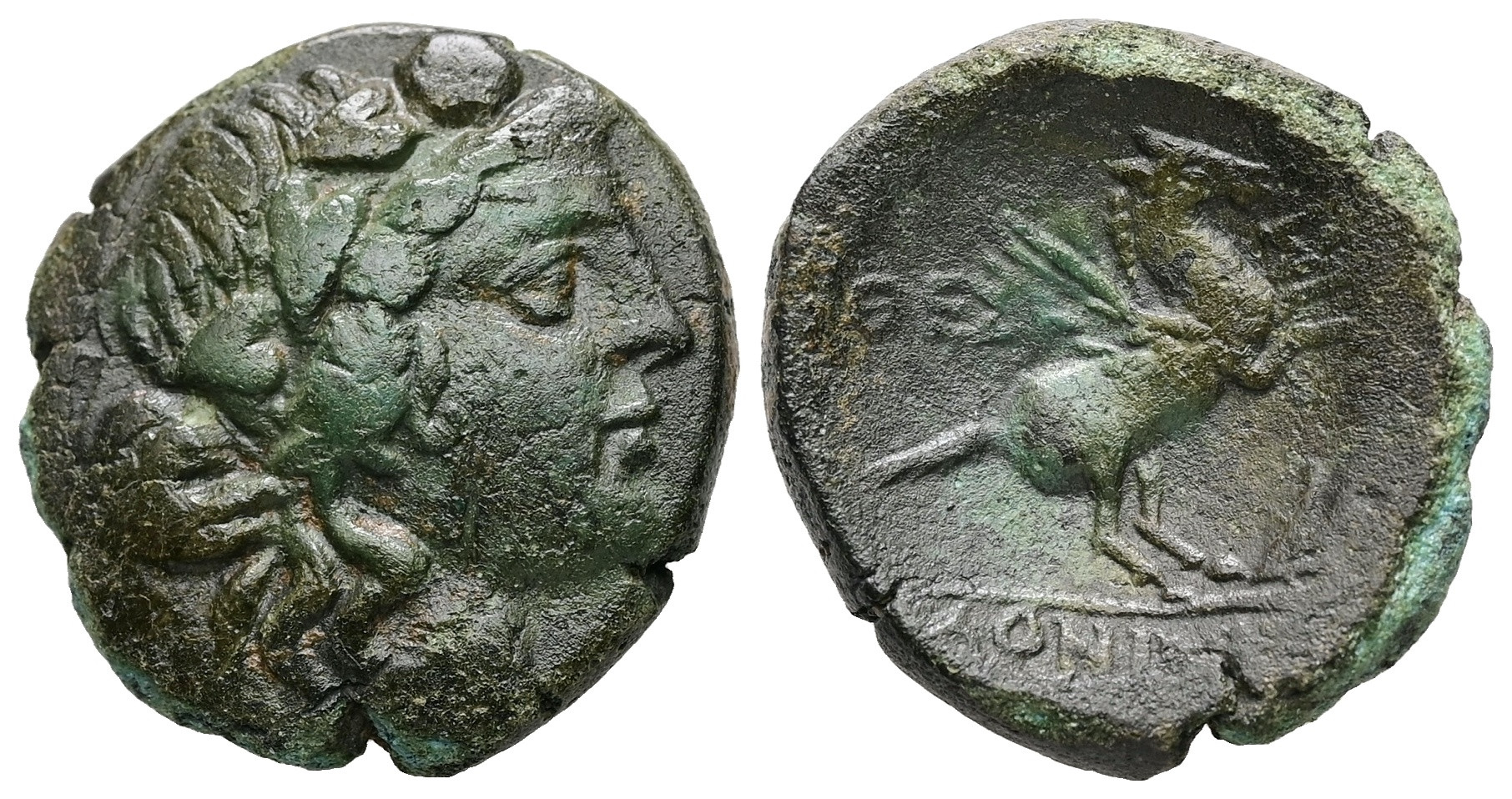
Thessalonic_Dionysus_Pegasus.jpg
[1]
734 - Pella over Thessalonica (drawing).jpg
Description
| ObverseInscription or printing placed on the obverse.:
|
Head of Zeus right, wearing laurel wreath.
|
ReverseInscription or printing placed on the reverse.:
|
ΠΕΛΛΗΣ (Greek) Bull standing right. Under his belly, monogram. In right field, monogram?
|
Mint and issuing power
| MintIdentifies the place of manufacture or issue of a numismatic object.:
|
Pella
|
Ancient regionAncient region.
|
Macedon
|
Modern countryModern country: Greece
|
AuthorityIdentifies the issuing power. The authority can be "pretended" when the name or the portrait of X is on the coin but he/she was not the issuing power. It can also be "uncertain" when there is no mention of X on the coin but he/she was the issuing power according to the historical sources:
|
Roman Republic
|
Chronology
| FromIdentifies the initial date in a range assigned in a numismatic context. 148 BCE toIdentifies the final date in a range assigned in a numismatic context.. 31 BCE
|
Hellenistic 323-30 BC  periodTime period of the numismatic object. periodTime period of the numismatic object.
|
Physical description
| MetalThe physical material (usually metal) from which an object is made.: Bronze
|
WeightWeight of the numismatic object (in grams). in grams: 9.159.15 g <br />9,150 mg <br />
|
|
AxisDescribes the directional relationship between the obverse and reverse of a numismatic object.: 33 mm <br />0.3 cm <br />
|
| DiameterDescribes diameter of an object (in mm).: 2121 mm <br />2.1 cm <br />
|
|
References
| Coin referenceReference of the Coin:
|
MacDonald 2000, p. 119, n° 1 (pl. 1, 1), MacDonald 2009, p. 84, n° 63
|
Coin series referenceReference to coin series study:
|
Gaebler 19351Gaebler 1935, p. 95, n° 8, MacDonald 20092MacDonald 2009, p. 84, n° 63, HGC 3.13HGC 3.1, n° 618
|
| Coin series web referenceCoin series web references:
|
|
Description
| ObverseInscription or printing placed on the obverse.:
|
Head of Dionysos right (visible: entire face of Dionysos from frontal hair locks to bottom of chin).
|
ReverseInscription or printing placed on the reverse.:
|
ΘΕΣ(ΣΑΛΟΝΙΚΗΣ) (Greek) Pegasus flying right. In field, monogram (visible: back half of Pegasus).
|
Mint and issuing power
Chronology
| FromIdentifies the initial date in a range assigned in a numismatic context. 187 BCE toIdentifies the final date in a range assigned in a numismatic context.. 168 BCE
|
Hellenistic 323-30 BC periodTime period of the numismatic object.
|
Physical description
References
| Coin type referenceReference to coin series study ᵖ:
|
Gaebler 19351Gaebler 1935, p. 118, n° 4, Lindgren 19934Lindgren 1993, n° 1151, Touratsoglou 19935Touratsoglou 1993, pl. IX.3, HGC 3.13HGC 3.1, n° 724, Kourempanas 20166Kourempanas 2016, n° 6
|
| Coin series web reference overstruckCoin series web references overstruck:
|
|
References
- a b Gaebler, Hugo (1935), Die antiken Münzen Nord-Griechenlands, unter Leitung von Theodor Wiegand. Band III, Makedonia und Paionia. 2. Abt., Verlag W. de Gruyter, Berlin
- ^ MacDonald, David (2009), Overstruck Greek coins: studies in Greek chronology and monetary theory, Whitman Publishing, Atlanta.
- a b Hoover, Oliver D. (2016), Handbook of coins of Macedon and its neighbors. 3. Part I: Macedon, Illyria, and Epeiros, sixth to first centuries BC, Lancaster, 437 p.
- ^ Lindgren, H. C. (1993), Ancient Greek Bronze coins from the Lindgren collection, Chrysopylon, Quarryville, 204 p.
- ^ Touratsoglou, Ioannis (1993), The coin circulation in Ancient Macedonia (ca. 200 B.C.-268-286 A.D.), The hoard evidence, Athens, Hellenic numismatic Society, in-4°, 88 p., XIII pl.
- ^ Kourempanas, Theodoros (2016), "Τα ελληνιστικά νομίσματα της Θεσσαλονίκης" , Athens, p. 112, pl. 13.


.jpg)