120 BCE - 90 BCE | BAΣΙΛΕΩΣ AΛΕΞANΔΡΟΥ
Overstriking coin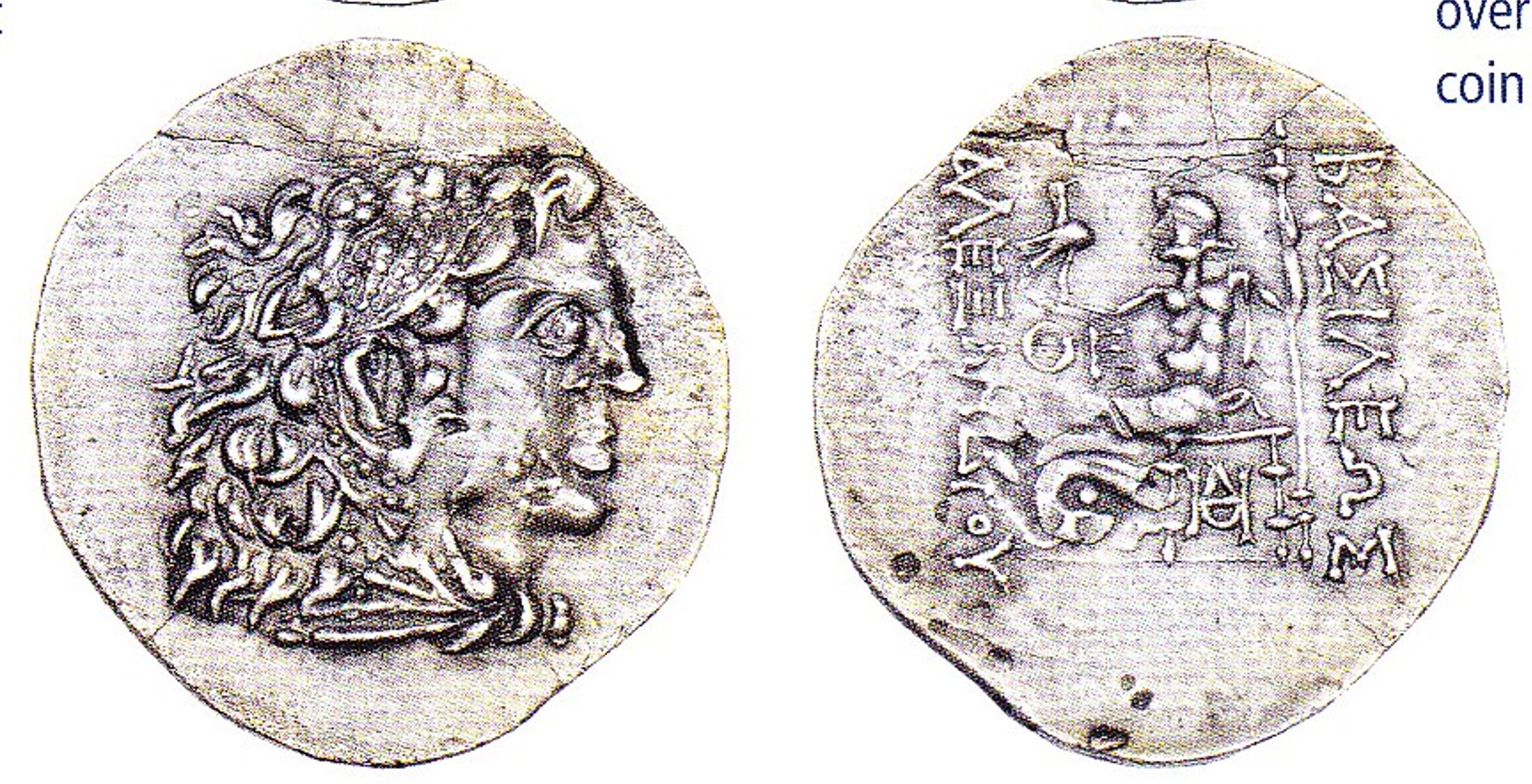
Odessos 864 MacDonald 100.jpg
Overstruck variety
Thasos tetradrachm.jpg
[1]
Odessos 864 MacDonald 100 (drawing).jpg
Description
| ObverseInscription or printing placed on the obverse.:
|
Head of Herakles right, wearing lion skin headdress.
|
ReverseInscription or printing placed on the reverse.:
|
BAΣΙΛΕΩΣ AΛΕΞANΔΡΟΥ (Greek) Zeus enthroned left, holding eagle and scepter. Under the throne, monogram (HΔ). In left field, ΘΕ.
|
Mint and issuing power
| MintIdentifies the place of manufacture or issue of a numismatic object.:
|
Odessus
|
Ancient regionAncient region.
|
Thrace
|
Modern countryModern country: Bulgaria
|
AuthorityIdentifies the issuing power. The authority can be "pretended" when the name or the portrait of X is on the coin but he/she was not the issuing power. It can also be "uncertain" when there is no mention of X on the coin but he/she was the issuing power according to the historical sources:
|
Alexander III the Great (Argead king, 336-323 BC)
|
Chronology
| FromIdentifies the initial date in a range assigned in a numismatic context. 120 BCE toIdentifies the final date in a range assigned in a numismatic context.. 90 BCE
|
Hellenistic 323-30 BC  periodTime period of the numismatic object. periodTime period of the numismatic object.
|
Physical description
| MetalThe physical material (usually metal) from which an object is made.: Silver
|
WeightWeight of the numismatic object (in grams). in grams: 15.4915.49 g <br />15,490 mg <br />
|
DenominationTerm indicating the value of a numismatic object. Examples: tetradrachm, chalkous, denarius.: tetradrachm
|
AxisDescribes the directional relationship between the obverse and reverse of a numismatic object.: 1212 mm <br />1.2 cm <br />
|
|
|
StandardStandard.: Attic
|
References
| Coin referenceReference of the Coin:
|
MacDonald 2009, p. 131, n° 100, Callataÿ 2021a, p. 279, n° 7
|
Coin series referenceReference to coin series study:
|
Price 19911Price 1991, n° 1181, MacDonald 20092MacDonald 2009, p. 131, n° 100, Callataÿ 2021a3Callataÿ 2021a, p. 279, n° 7
|
| Coin series web referenceCoin series web references:
|
|
Description
| ObverseInscription or printing placed on the obverse.:
|
Head of Dionysus right, wearing ivy wreath (visible: locks of hair at back of head).
|
ReverseInscription or printing placed on the reverse.:
|
(HPAK)ΛΕ(ΟΥΣ ΣΩΤΗΡΟΣ) (ΘΑΣΙΩΝ) (Greek) Heracles standing to front, nude, head left, holding lion skin and club. In left field, letter or monogram (visible: end of the lion skin).
|
Mint and issuing power
Chronology
| FromIdentifies the initial date in a range assigned in a numismatic context. 160 BCE toIdentifies the final date in a range assigned in a numismatic context.. 90 BCE
|
Hellenistic 323-30 BC periodTime period of the numismatic object.
|
Physical description
| DenominationTerm indicating the value of a numismatic object. Examples: tetradrachm, chalkous, denarius. ᵖ:
|
tetradrachm
|
StandardStandard. ᵖ:
|
Attic
|
References
References
- ^ Price, Martin Jessop (1991), The Coinage in the Name of Alexander the Great and Philip Arrhidaeus: a British Museum Catalogue, 2 vol., Zürich-London, 637 p., 637 p., clix pl.
- ^ MacDonald, David (2009), Overstruck Greek coins: studies in Greek chronology and monetary theory, Whitman Publishing, Atlanta.
- ^ Callataÿ, François de (2021), “On pattern and purpose of overstrikes of late Hellenistic tetradrachms in Thrace Macedonia”, in Ulrike Peter and Bernhard Weisser (eds.), Thrace. Local coinage and regional identity, Berlin Studies of the Ancient World 77, Berlin, Topoi, p. 263-289.
- ^ Sear, David R. (1978), Greek coins and their values. Vol. I, Europe, London, xl, 316 p.
- ^ Hoover, Oliver D. (2010), The Handbook of Greek Coinage Series, volume 6 : handbook of coins of the islands: Adriatic, Iionian, Thracian, Aegean, and Carpathian seas (excluding Crete and Cyprus), sixth to first centuries BC, Lancaster, 358 p.


.jpg)