3121 - Tyras (AE Demeter r./forepart of horse r.) over Tyras (head of Tyras l./head of horse l.) (Ebay seller blackseaantiquities, April 2017)
From SILVER
310 BCE - 300 BCE | TYPA
Images
Overstriking coin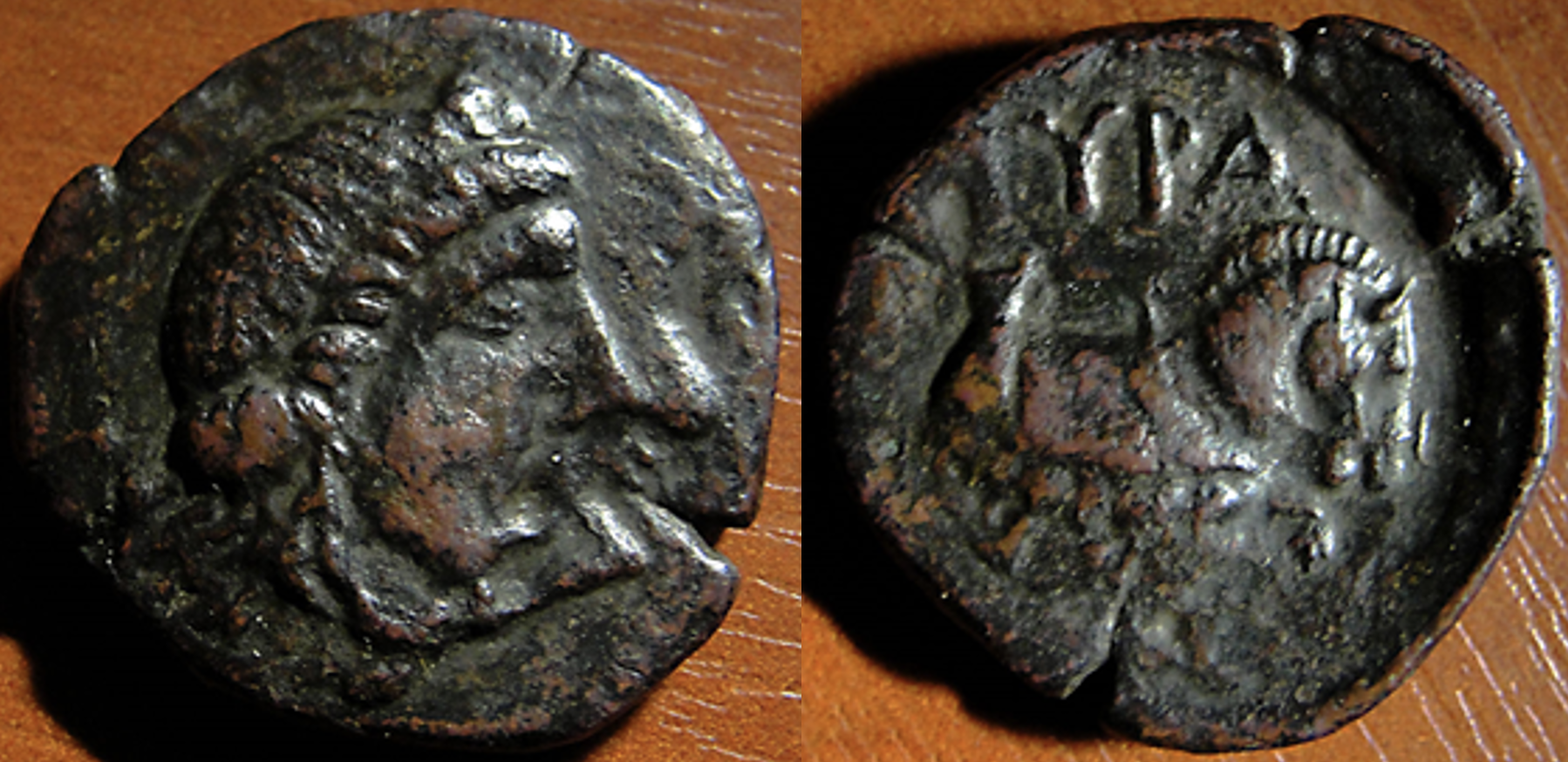
_over_Tyras.png)
SO 593 - Tyras (AE Demeter-Horse) over Tyras.png
Overstruck variety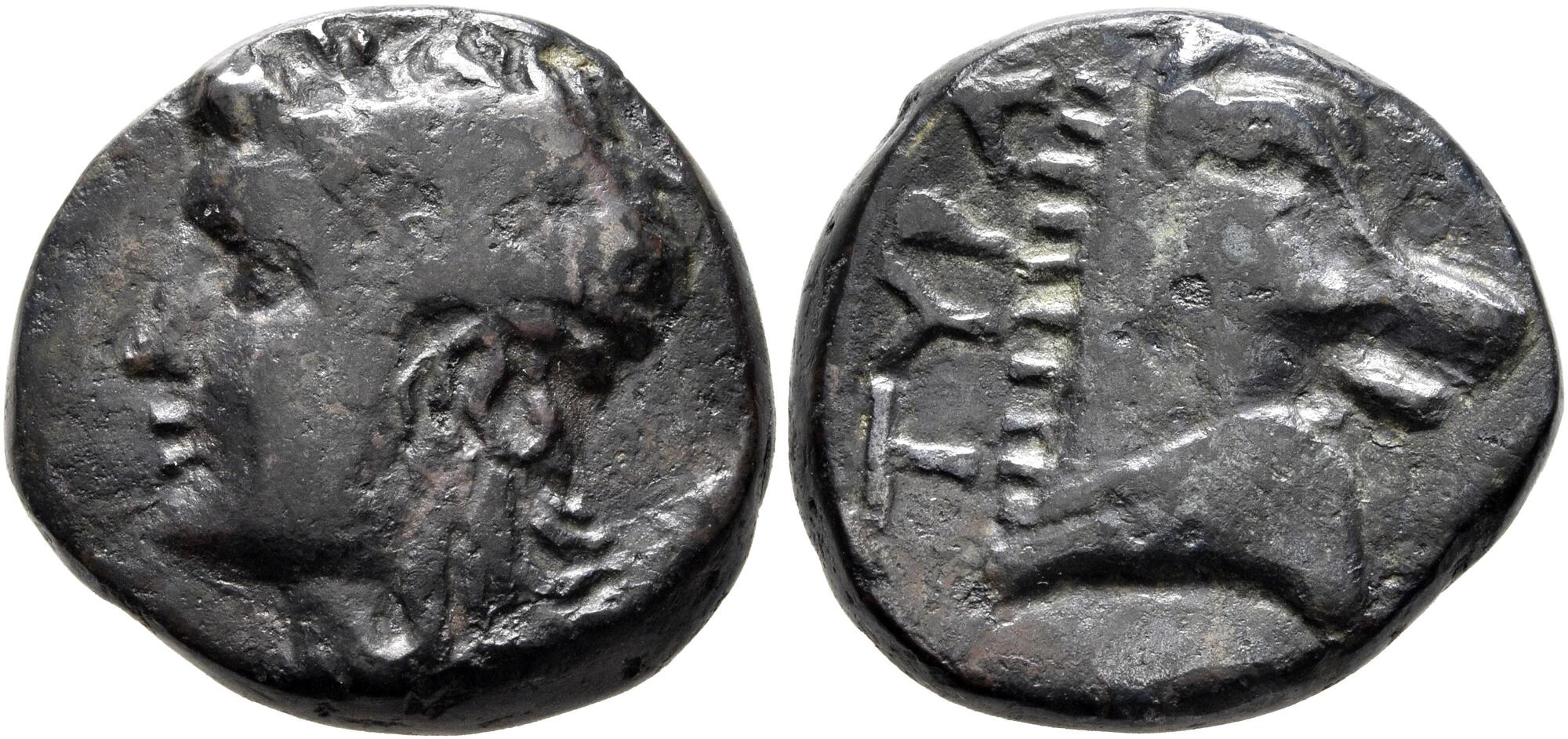

Tyras_Tyras_horse.jpg [1]
Location/history
| Sale(s)Sale(s) ᵖ: | Ebay seller blackseaantiquities, 22 Apr. 2017 | |
Overstriking coin
Description
| ObverseInscription or printing placed on the obverse.: | Head of Demeter right, wearing grain wreath. | ReverseInscription or printing placed on the reverse.: | TYPA (Greek) Forepart of horse right. |
Mint and issuing power
| MintIdentifies the place of manufacture or issue of a numismatic object.: | Tyras | Ancient regionAncient region. | Thrace (Sarmatia) | Modern countryModern country: Ukraine | AuthorityIdentifies the issuing power. The authority can be "pretended" when the name or the portrait of X is on the coin but he/she was not the issuing power. It can also be "uncertain" when there is no mention of X on the coin but he/she was the issuing power according to the historical sources: |
Chronology
| FromIdentifies the initial date in a range assigned in a numismatic context. 310 BCE toIdentifies the final date in a range assigned in a numismatic context.. 300 BCE | Hellenistic 323-30 BC  periodTime period of the numismatic object. periodTime period of the numismatic object.
|
Physical description
| MetalThe physical material (usually metal) from which an object is made.: Bronze
|
WeightWeight of the numismatic object (in grams). in grams: 10.5410.54 g <br />10,540 mg <br /> | DenominationTerm indicating the value of a numismatic object. Examples: tetradrachm, chalkous, denarius.: obol
|
|
| DiameterDescribes diameter of an object (in mm).: 2222 mm <br />2.2 cm <br /> | |||
References
| Coin referenceReference of the Coin: | Coin series referenceReference to coin series study: | HGC 3.21HGC 3.2, n° 1957 |
Overstruck type
Description
| ObverseInscription or printing placed on the obverse.: | Horned head of the river-god Tyras to left, wearing laurel wreath. | ReverseInscription or printing placed on the reverse.: | TYPA (Greek) Head of a bridled horse to right |
Mint and issuing power
| MintIdentifies the place of manufacture or issue of a numismatic object. ᵖ: | Tyras | Ancient regionAncient region. ᵖ | Thrace (Sarmatia) | Modern countryModern country: Ukraine | AuthorityIdentifies the authority in whose name (explicitly or implicitly) a numismatic object was issued. ᵖ: |
Chronology
| FromIdentifies the initial date in a range assigned in a numismatic context. 350 BCE toIdentifies the final date in a range assigned in a numismatic context.. 300 BCE | Classical 480-323 BC , Hellenistic 323-30 BC periodTime period of the numismatic object.
|
Physical description
References
| Coin type referenceReference to coin series study ᵖ: | SNG BM Black Sea2SNG BM Black Sea, n° 337, SNG Stancomb3SNG Stancomb, n° 331, HGC 3.21HGC 3.2, n° 1955 |
Additional data
| Frequency of overstrikesFrequency of overstrikes: | exceptional | Level of confidenceLevel of confidence of the identification: | strong |
| RemarksRemarks: | "The previouse underlayered coin (obv: Head of Tyras, Rev: Head of Galloping horse right. TYRA left) clearly seen. Both obverse and reverse sides display original detail & images" | ||
References
- a b Hoover, Oliver D. (2017), Handbook of Coins of Macedon and Its Neighbors. 3. Part 2: Thrace, Skythia, and Taurike, Sixth to First Centuries BC, Lancaster-London, xix, 232 p.
- ^ Price, Martin J. (1993), Sylloge Nummorum Graecorum, Great Britain, Volume IX, British Museum, Part 1: The Black Sea, London, [132] p. : ill. ; 31 cm.
- ^ Sylloge nummorum graecorum. Great Britain. Volume 11, The William Stancomb Collection of coins of the Black Sea Region, Oxford, 2000, liii p. of plates, map ; 31 cm.