105 BCE - 90 BCE | ΠANTIKAΠAITΩN
Overstriking coin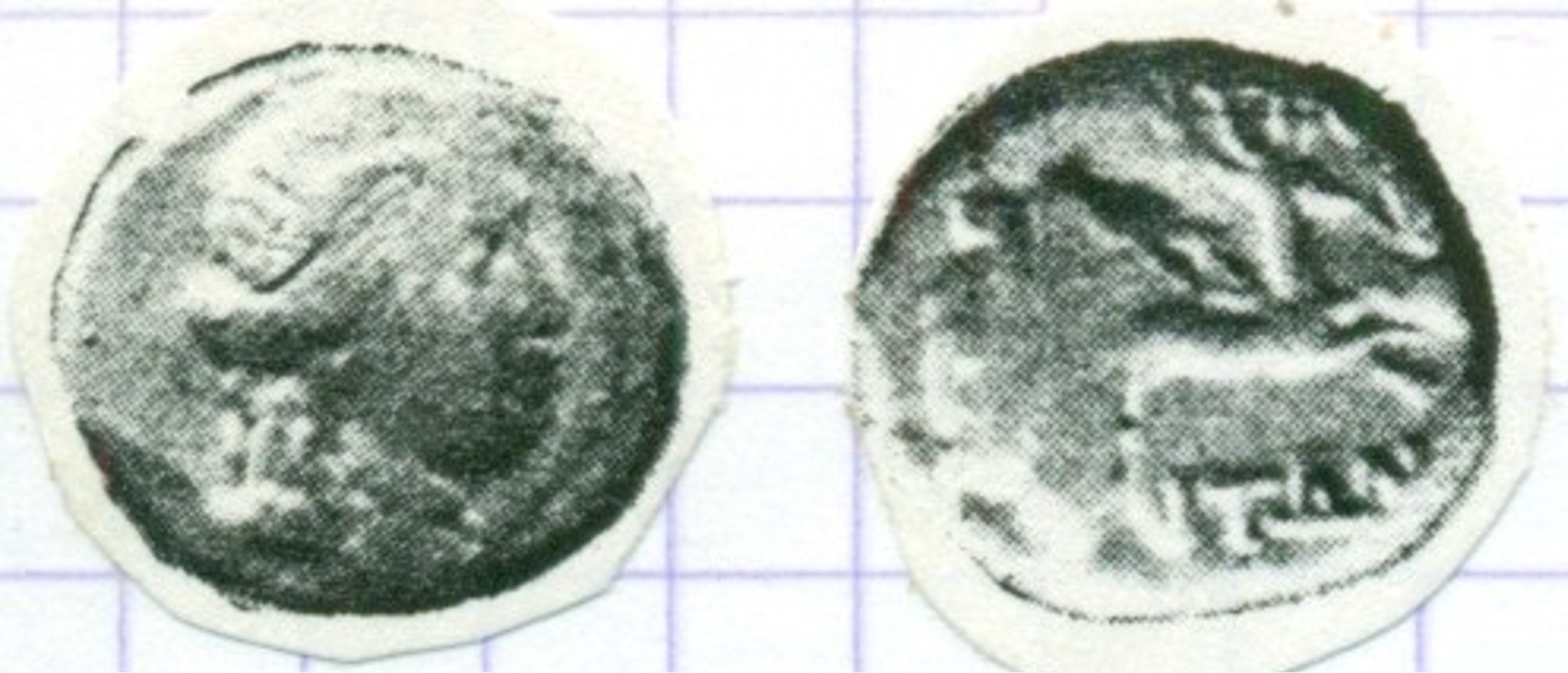
SO 637 - Panticapaeum (drachm) over Amisus?.jpg
Overstruck variety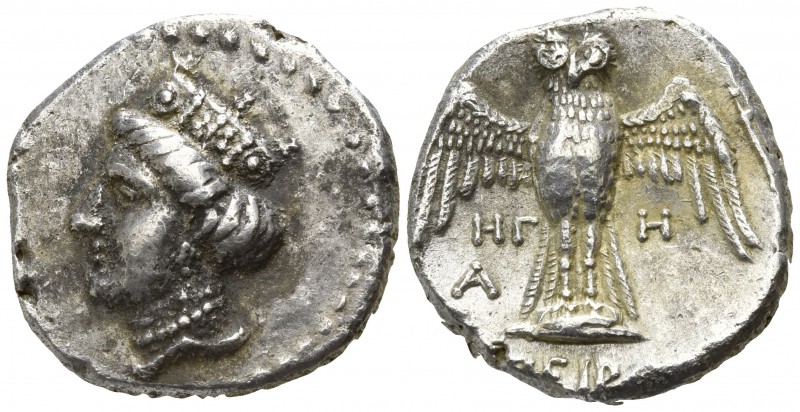
Amisos Hera Owl overstruck.jpg
Description
| ObverseInscription or printing placed on the obverse.:
|
Head of Dionysos right, wearing laurel wreath.
|
ReverseInscription or printing placed on the reverse.:
|
ΠANTIKAΠAITΩN (Greek) Stag running right, thyrsus over shoulder.
|
Mint and issuing power
Chronology
| FromIdentifies the initial date in a range assigned in a numismatic context. 105 BCE toIdentifies the final date in a range assigned in a numismatic context.. 90 BCE
|
Hellenistic 323-30 BC  periodTime period of the numismatic object. periodTime period of the numismatic object.
|
Physical description
| MetalThe physical material (usually metal) from which an object is made.: Silver
|
|
DenominationTerm indicating the value of a numismatic object. Examples: tetradrachm, chalkous, denarius.: drachma
|
|
|
|
|
References
Description
| ObverseInscription or printing placed on the obverse.:
|
Turreted bust of Hera-Tyche right
|
ReverseInscription or printing placed on the reverse.:
|
Owl standing facing, with spread wind, on shield
|
Mint and issuing power
| MintIdentifies the place of manufacture or issue of a numismatic object. ᵖ:
|
Amisus
|
Ancient regionAncient region. ᵖ
|
Pontus
|
Modern countryModern country: Turkey
|
AuthorityIdentifies the authority in whose name (explicitly or implicitly) a numismatic object was issued. ᵖ:
|
|
Chronology
| FromIdentifies the initial date in a range assigned in a numismatic context. 120 BCE toIdentifies the final date in a range assigned in a numismatic context.. 63 BCE
|
Hellenistic 323-30 BC periodTime period of the numismatic object.
|
Physical description
| DenominationTerm indicating the value of a numismatic object. Examples: tetradrachm, chalkous, denarius. ᵖ:
|
drachma
|
|
|
References
References
- ^ Golenko, Konstantin V. (1964), Denezhnoe obrashchenie Kolkhidy v Rimskoe vremi͡a = (The monetary circulation of Colchis during the Roman period), Leningrad, Izd-vo. Gosud. Ermitazha
- ^ MacDonald, David (2005), An introduction to the history and coinage of the kingdom of the Bosporus : including the coinage of Panticapaeum (with "Apollonia" and "Myrmecium"), Phanagoria, Gorgippia, Sindicus Limen or the Sindoi, Nymphaeum, Theodosia, and the kings of the Cimmerian Empire, Lancaster, Penn., London, Classical Numismatic Group, p. 152.
- a b Hoover, Oliver D. (2012), Handbook of Greek Coinages. 7. Coins of northern and Central Anatolia - Pontos, Paphlagonia, Bithynia, Phrygia, Galatia, lykaonia, and Kappadokia (with Kolchis and the Kimmerian bosporos), Lancaster, lxxxii, 352 p. : ill. ; 23 cm.
_over_Amisus%3F.jpg)