46 BCE - 43 BCE | ΑΡΧΟΝΤΟΣ AΣΑΝΔΡΟY
Overstriking coin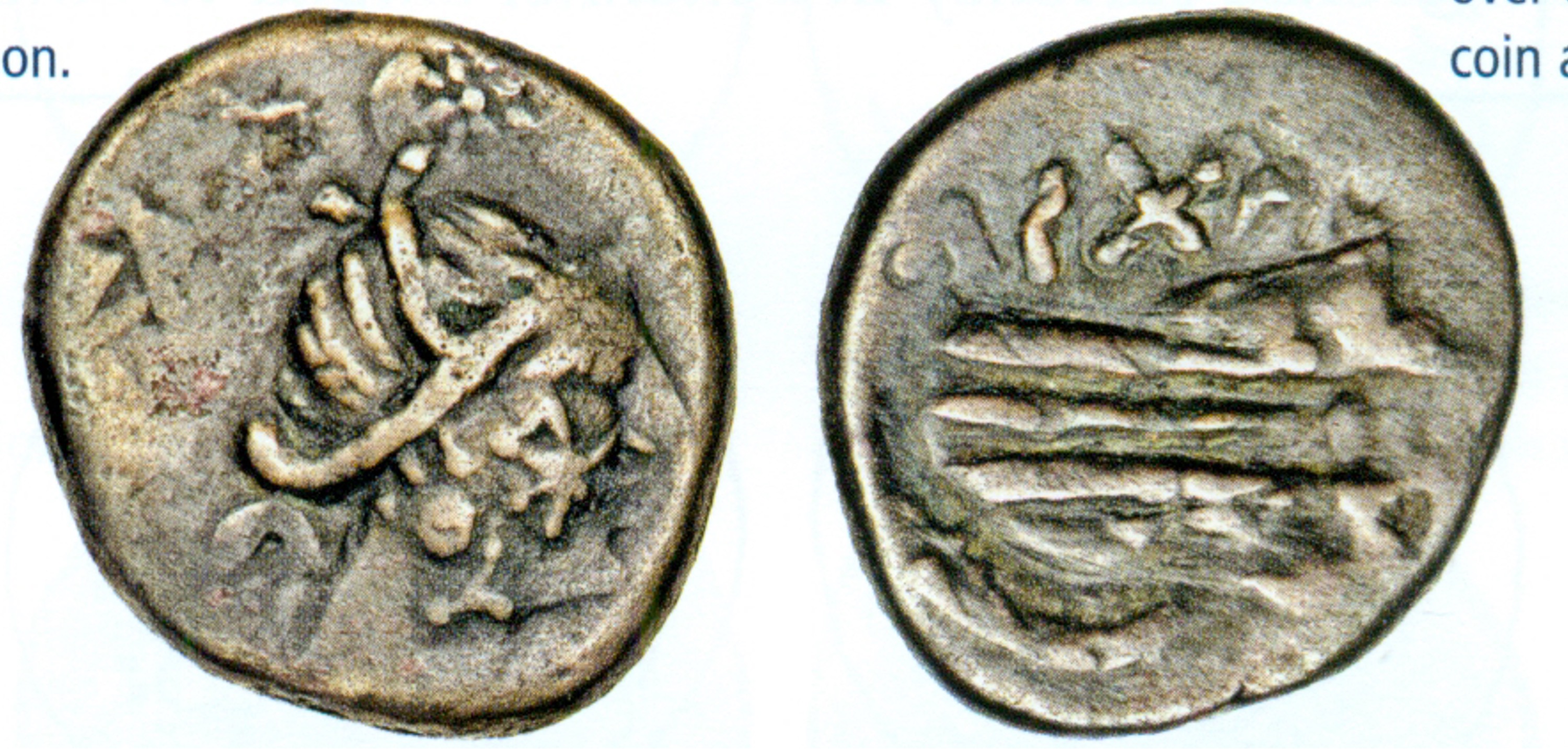
SO 704 - Uncertain mint in Bosporus (AE Nike-prow).jpg
Overstruck variety
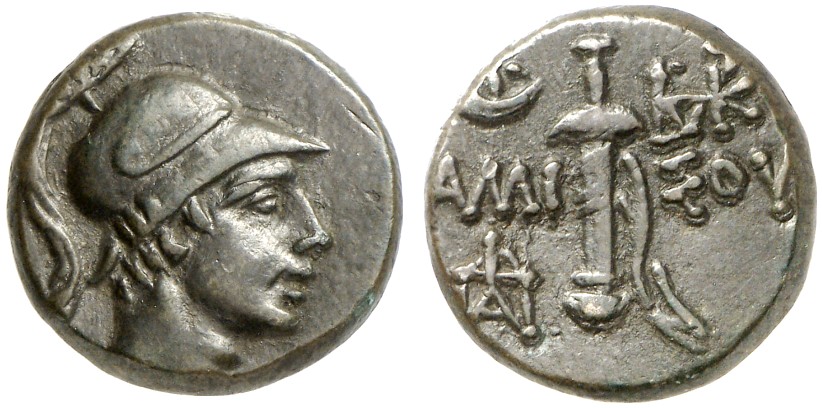
Traces of the overstruck variety
704 Amisus.jpg
Description
| ObverseInscription or printing placed on the obverse.:
|
Bust of Nike right.
|
ReverseInscription or printing placed on the reverse.:
|
ΑΡΧΟΝΤΟΣ AΣΑΝΔΡΟY (Greek) Prow of galley left.
|
Mint and issuing power
Chronology
| FromIdentifies the initial date in a range assigned in a numismatic context. 46 BCE toIdentifies the final date in a range assigned in a numismatic context.. 43 BCE
|
Hellenistic 323-30 BC  , Roman from 30 BC periodTime period of the numismatic object. , Roman from 30 BC periodTime period of the numismatic object.
|
Physical description
| MetalThe physical material (usually metal) from which an object is made.: Bronze
|
WeightWeight of the numismatic object (in grams). in grams: 8.368.36 g <br />8,360 mg <br />
|
|
AxisDescribes the directional relationship between the obverse and reverse of a numismatic object.: 1212 mm <br />1.2 cm <br />
|
| DiameterDescribes diameter of an object (in mm).: 2121 mm <br />2.1 cm <br />
|
|
References
Description
| ObverseInscription or printing placed on the obverse.:
|
Head of Ares right, wearing crested helmet (visible: outline of back of helmet).
|
ReverseInscription or printing placed on the reverse.:
|
AM(IΣOY) (Greek) Sword in sheath. To upper left, star and crescent. In field, monograms (visible: star and crescent, portions of both monograms).
|
Mint and issuing power
Chronology
| FromIdentifies the initial date in a range assigned in a numismatic context. 111 BCE toIdentifies the final date in a range assigned in a numismatic context.. 90 BCE
|
Hellenistic 323-30 BC periodTime period of the numismatic object.
|
Physical description
References
References
- ^ Anokhin, Vladilen Afanasʹevich (1986), Monetnoe delo Bospora, Kiev, Naukova dumka, p. 178, pl. 40.
- a b Price, Martin J. (1993), Sylloge Nummorum Graecorum, Great Britain, Volume IX, British Museum, Part 1: The Black Sea, London, [132] p. : ill. ; 31 cm.
- ^ Amandry, Michel - Burnett, Andrew - Ripolles, Pere Pau (1998), Roman provincial coinage. I. From the death of Caesar to the death of Vitellius (44 BC-AC 69), London-Paris, 2 vol., xvii + 812 p., 195 pl.
- ^ Hoover, Oliver D. (2012), Handbook of Greek Coinages. 7. Coins of northern and Central Anatolia - Pontos, Paphlagonia, Bithynia, Phrygia, Galatia, lykaonia, and Kappadokia (with Kolchis and the Kimmerian bosporos), Lancaster, lxxxii, 352 p. : ill. ; 23 cm.
.jpg)
 Traces of the overstruck variety