304 BCE - 281 BCE | ΒΑΣΙΛΕΩΣ ΛΥΣΙΜΑΚΟΥ
Overstriking coin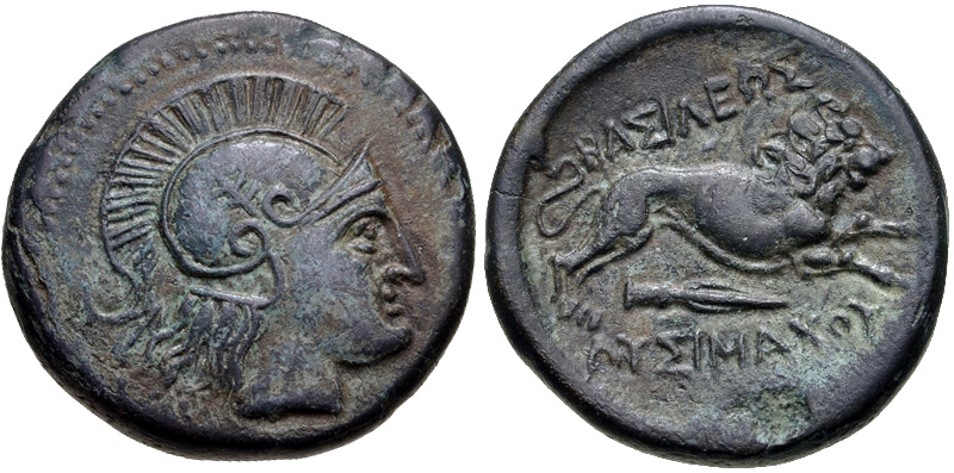
Lysimachia_Classical_Numismatic_Group,_EA_408,_25_Oct._2017,_35.jpg
[1]
Overstruck variety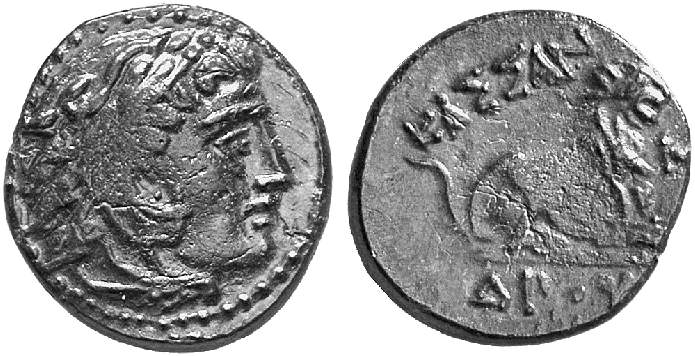
Cassander lion crouching.jpeg
[2]
|
|
Sale(s)Sale(s) ᵖ:
|
Classical Numismatic Group, EA 408, 25 Oct. 2017, 35
|
|
|
|
Description
| ObverseInscription or printing placed on the obverse.:
|
Head of Athena right, wearing crested helmet.
|
ReverseInscription or printing placed on the reverse.:
|
ΒΑΣΙΛΕΩΣ ΛΥΣΙΜΑΚΟΥ (Greek) Lion running right. Below, symbol.
|
Mint and issuing power
Chronology
| FromIdentifies the initial date in a range assigned in a numismatic context. 304 BCE toIdentifies the final date in a range assigned in a numismatic context.. 281 BCE
|
Hellenistic 323-30 BC  periodTime period of the numismatic object. periodTime period of the numismatic object.
|
Physical description
| MetalThe physical material (usually metal) from which an object is made.: Bronze
|
WeightWeight of the numismatic object (in grams). in grams: 6.456.45 g <br />6,450 mg <br />
|
|
AxisDescribes the directional relationship between the obverse and reverse of a numismatic object.: 1111 mm <br />1.1 cm <br />
|
| DiameterDescribes diameter of an object (in mm).: 2020 mm <br />2 cm <br />
|
|
References
Description
| ObverseInscription or printing placed on the obverse.:
|
Head of Herakles right
|
ReverseInscription or printing placed on the reverse.:
|
KAΣΣΑΝ-ΔΡΟΥ (Greek) Lion crouching right
|
Mint and issuing power
Chronology
| FromIdentifies the initial date in a range assigned in a numismatic context. 317 BCE toIdentifies the final date in a range assigned in a numismatic context.. 305 BCE
|
Hellenistic 323-30 BC periodTime period of the numismatic object.
|
Physical description
References
| Frequency of overstrikesFrequency of overstrikes:
|
rare and spread
|
Level of confidenceLevel of confidence of the identification:
|
strong
|
| RemarksRemarks:
|
"overstruck, likely on an Alexander-type bronze (traces of the lion mane on Herakles' headdress is visible at the edge on the obv.)"
|
References
- ^ Sear, David R. (1979), Greek coins and their values. Vol. II, Asia and North Africa, London, xlviii, p. 317-762
- ^ Hoover, Oliver D. (2017), Handbook of Coins of Macedon and Its Neighbors. 3. Part 2: Thrace, Skythia, and Taurike, Sixth to First Centuries BC, Lancaster-London, xix, 232 p.
- ^ Gaebler, Hugo (1935), Die antiken Münzen Nord-Griechenlands, unter Leitung von Theodor Wiegand. Band III, Makedonia und Paionia. 2. Abt., Verlag W. de Gruyter, Berlin
- ^ Hoover, Oliver D. (2016), Handbook of coins of Macedon and its neighbors. 3. Part I: Macedon, Illyria, and Epeiros, sixth to first centuries BC, Lancaster, 437 p.