173 BCE - 169 BCE | ΒΑΣΙΛΕΩΣ ΑΝΤΙΟΧΟΥ ΘΕΟΥ ΕΠΙΦΑΝΟΥΣ
Overstriking coin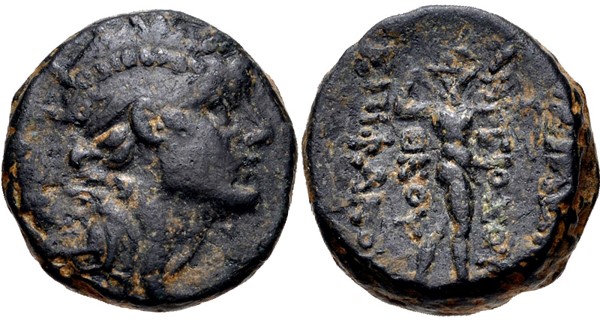
Antiochus_IV_Classical_Numismatic_Group,_EA_316,_4_Dec._2013,_154.jpg
[1]
| Museum collectionMuseum collection:
|
Paris, Bibliothèque nationale de France, département Monnaies, médailles et antiques, AA.GR.12721
|
Sale(s)Sale(s) ᵖ:
|
Classical Numismatic Group, EA 316, 4 Dec. 2013, 154.
|
| Private collection(s)Private collection(s) ᵖ:
|
From the J. P. Righetti Collection.
|
|
Description
| ObverseInscription or printing placed on the obverse.:
|
Head of Antiochos right, wearing radiate crown and diadem. Border of dots.
|
ReverseInscription or printing placed on the reverse.:
|
ΒΑΣΙΛΕΩΣ ΑΝΤΙΟΧΟΥ ΘΕΟΥ ΕΠΙΦΑΝΟΥΣ (Greek) Apollo standing right, nude, holding bow and drawing arrow from quiver on back.
|
Mint and issuing power
Chronology
| FromIdentifies the initial date in a range assigned in a numismatic context. 173 BCE toIdentifies the final date in a range assigned in a numismatic context.. 169 BCE
|
Hellenistic 323-30 BC  periodTime period of the numismatic object. periodTime period of the numismatic object.
|
Physical description
| MetalThe physical material (usually metal) from which an object is made.: Bronze
|
WeightWeight of the numismatic object (in grams). in grams: 4.184.18 g <br />4,180 mg <br />
|
|
AxisDescribes the directional relationship between the obverse and reverse of a numismatic object.: 1212 mm <br />1.2 cm <br />
|
| DiameterDescribes diameter of an object (in mm).: 1414 mm <br />1.4 cm <br />
|
|
References
Description
| ObverseInscription or printing placed on the obverse.:
|
|
ReverseInscription or printing placed on the reverse.:
|
|
Mint and issuing power
| MintIdentifies the place of manufacture or issue of a numismatic object. ᵖ:
|
|
Ancient regionAncient region. ᵖ
|
|
Modern countryModern country:
|
AuthorityIdentifies the authority in whose name (explicitly or implicitly) a numismatic object was issued. ᵖ:
|
|
Chronology
| FromIdentifies the initial date in a range assigned in a numismatic context. toIdentifies the final date in a range assigned in a numismatic context..
|
periodTime period of the numismatic object.
|
Physical description
References
References
- ^ Houghton, Arthur - Spaer, Arnold - Lorber, Catharine C. (1998), Sylloge nummorum graecorum. Israel. I : The Arnold Spaer collection of Seleucid coins, London, Italo Vecchi Ltd., p. 389, pl. 189.
- ^ Houghton, Arthur - Lorber, Catharine C. - Hoover, Oliver D. (2008), Seleucid coins : a comprehensive catalogue. Part 2, Seleucus IV through Antiochus XIII, 2 v., New York - Lancaster - London, (xxx), 120 p. of plates : ill., maps, tables
- ^ Hoover, Oliver D. (2009), Handbook of ancient Syrian coins : royal and civic issues, fourth to first centuries BC, The Handbook of Greek Coinage 9, Lancaster, lxix, 332 p.