241 BCE - 238 BCE | ΛIBYΩN
Overstriking coin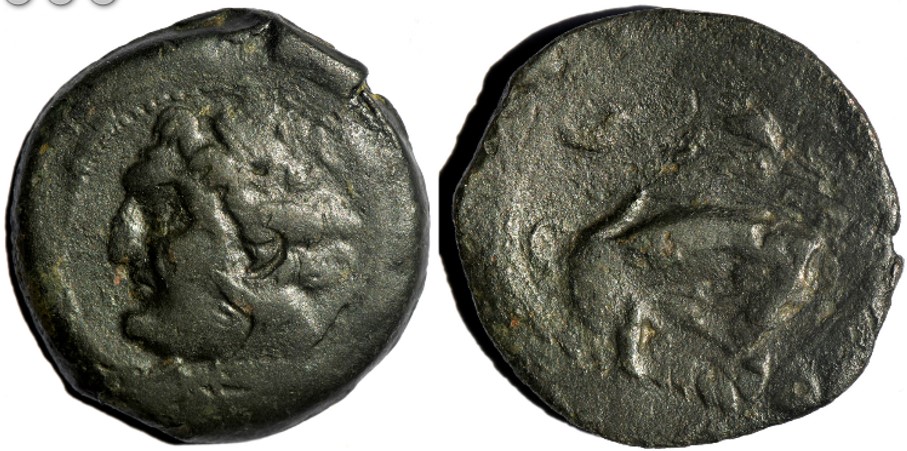
Carthage 2460 Carthago Num.jpg
[1]
|
|
Sale(s)Sale(s) ᵖ:
|
Carthago Numismatics at Vcoins, June 25, 2023 (info DMD)
|
|
|
|
Description
| ObverseInscription or printing placed on the obverse.:
|
Head of Herakles left, wearing lion skin
|
ReverseInscription or printing placed on the reverse.:
|
ΛIBYΩN (Greek) Bull butting right, M above
|
Mint and issuing power
| MintIdentifies the place of manufacture or issue of a numismatic object.:
|
Carthage
|
Ancient regionAncient region.
|
Zeugitana
|
Modern countryModern country: Tunisia
|
AuthorityIdentifies the issuing power. The authority can be "pretended" when the name or the portrait of X is on the coin but he/she was not the issuing power. It can also be "uncertain" when there is no mention of X on the coin but he/she was the issuing power according to the historical sources:
|
Carthaginian Empire
|
Chronology
| FromIdentifies the initial date in a range assigned in a numismatic context. 241 BCE toIdentifies the final date in a range assigned in a numismatic context.. 238 BCE
|
Hellenistic 323-30 BC  periodTime period of the numismatic object. periodTime period of the numismatic object.
|
Physical description
| MetalThe physical material (usually metal) from which an object is made.: Bronze
|
WeightWeight of the numismatic object (in grams). in grams: 13.7513.75 g <br />13,750 mg <br />
|
|
|
| DiameterDescribes diameter of an object (in mm).: 2929 mm <br />2.9 cm <br />
|
|
References
Description
| ObverseInscription or printing placed on the obverse.:
|
Head of Tanit l.
|
ReverseInscription or printing placed on the reverse.:
|
Bust of horse r.
|
Mint and issuing power
| MintIdentifies the place of manufacture or issue of a numismatic object. ᵖ:
|
Carthage
|
Ancient regionAncient region. ᵖ
|
Zeugitana
|
Modern countryModern country: Tunisia
|
AuthorityIdentifies the authority in whose name (explicitly or implicitly) a numismatic object was issued. ᵖ:
|
|
Chronology
| FromIdentifies the initial date in a range assigned in a numismatic context. toIdentifies the final date in a range assigned in a numismatic context..
|
periodTime period of the numismatic object.
|
Physical description
References
References
- ^ Carradice, Ian A. - La Niece, Susan (1988), "The Libyan War and Coinage: a New Hoard and the Evidence of Metal Analysis," Numismatic Chronicle, 148, p. 33-52, 6 pl.