51 BCE - 34 BCE- | BAΣIΛEΩΣ - ΒΑΣΙΛΕΩN / [APTAYAΣΔOY]
Overstriking coin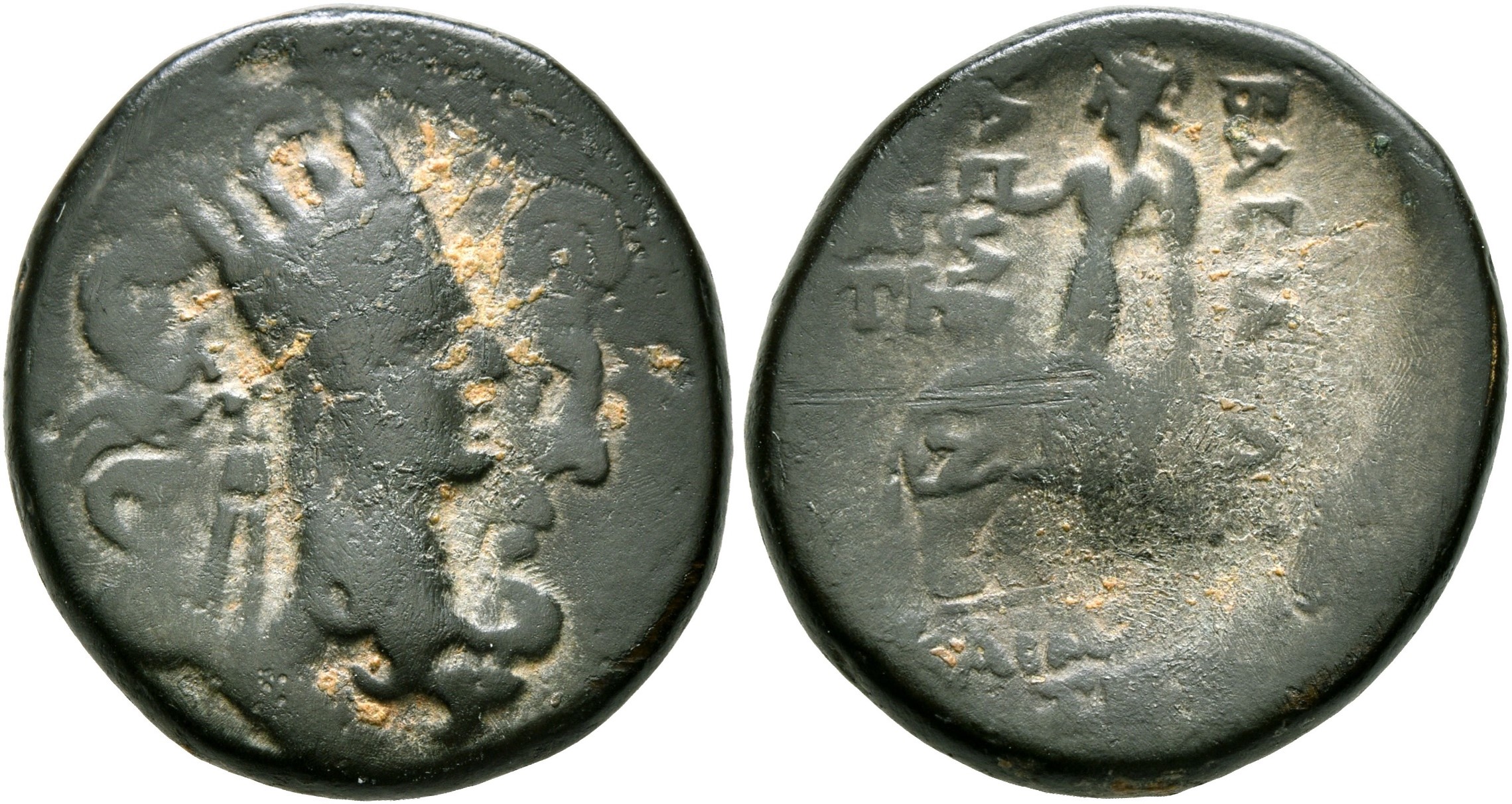
Artavasdes II on Apameia - Leu, Web Auction 15, 27 Feb. 2021, 674.jpg
[1]
Overstruck variety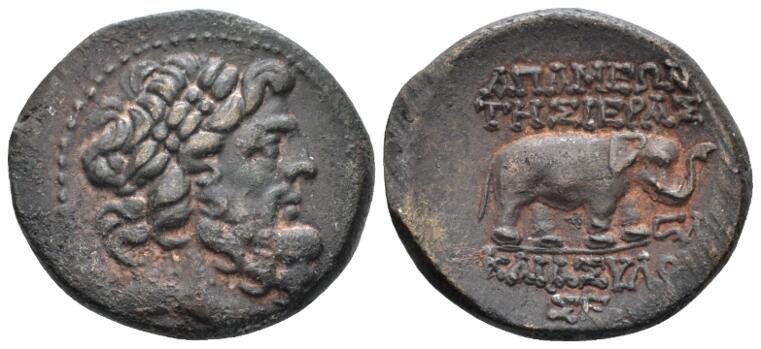
Artavasdes II on Apameia - Leu, Web Auction 15, 27 Feb. 2021, 674 overstruck variety.jpg
[2]
|
|
Sale(s)Sale(s) ᵖ:
|
Leu, Web Auction 15, 27 Feb. 2021, 674. From an important collection of Armenian coins
|
|
|
|
Description
| ObverseInscription or printing placed on the obverse.:
|
| ReverseInscription or printing placed on the reverse.:
|
BAΣIΛEΩΣ - ΒΑΣΙΛΕΩN / [APTAYAΣΔOY] (Greek) Nike standing left, holding wreath in her right hand
|
Mint and issuing power
Chronology
| FromIdentifies the initial date in a range assigned in a numismatic context. 51 BCE toIdentifies the final date in a range assigned in a numismatic context.. 34 BCE
|
Hellenistic 323-30 BC  periodTime period of the numismatic object. periodTime period of the numismatic object.
|
Physical description
| MetalThe physical material (usually metal) from which an object is made.: Bronze
|
WeightWeight of the numismatic object (in grams). in grams: 8.668.66 g <br />8,660 mg <br />
|
DenominationTerm indicating the value of a numismatic object. Examples: tetradrachm, chalkous, denarius.: tetrachalkon
|
AxisDescribes the directional relationship between the obverse and reverse of a numismatic object.: 1111 mm <br />1.1 cm <br />
|
| DiameterDescribes diameter of an object (in mm).: 2323 mm <br />2.3 cm <br />
|
|
References
Description
| ObverseInscription or printing placed on the obverse.:
|
Laureate head of Zeus r.
|
ReverseInscription or printing placed on the reverse.:
|
AΠAMEΩN / THΣ IEPAΣ - KAI AΣYΛOY (Greek) Elephant walking r.
|
Mint and issuing power
| MintIdentifies the place of manufacture or issue of a numismatic object. ᵖ:
|
Apameia
|
Ancient regionAncient region. ᵖ
|
Syria
|
Modern countryModern country: Syria
|
AuthorityIdentifies the authority in whose name (explicitly or implicitly) a numismatic object was issued. ᵖ:
|
|
Chronology
| FromIdentifies the initial date in a range assigned in a numismatic context. 100 BCE toIdentifies the final date in a range assigned in a numismatic context.. 50 BCE
|
Hellenistic 323-30 BC periodTime period of the numismatic object.
|
Physical description
References
| Frequency of overstrikesFrequency of overstrikes:
|
frequent
|
Level of confidenceLevel of confidence of the identification:
|
sure
|
| RemarksRemarks:
|
"This coin was overstruck on an earlier issue of Apameia in Syria (HGC 9, 1419): the head of Zeus is still visible on the obverse whereas the reverse shows an elephant standing tothe right and parts of the legend (AΠ[AMEΩN] / TH[Σ IEΡAΣ] - KAI A[ΣΥΛOΥ] / Σ[...]). Unfortunately, the date is not fully readable, but it is likely ΣE = SE 237 = 76/5 BC"
|
References
- ^ Sear, David R. (1979), Greek coins and their values. Vol. II, Asia and North Africa, London, xlviii, p. 317-762
- ^ Kovacs, Frank (2016), Armenian coinage in the classical period, Classical Numismatic Studies 10, Lancaster, 83 p.
- ^ Hoover, Oliver D. (2009), Handbook of ancient Syrian coins : royal and civic issues, fourth to first centuries BC, The Handbook of Greek Coinage 9, Lancaster, lxix, 332 p.
- ^ Cohen, Edward R. (2011), Dated coins of antiquity: a comprehensive catalogue of the coins and how their numbers came about, Lancaster, 652 p.